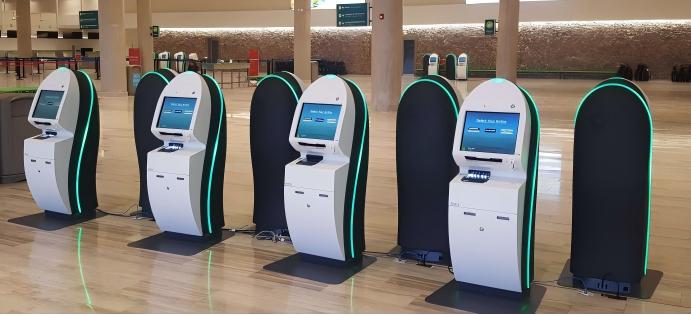
21.5 inches: the "golden size" of self-service check-in kiosks
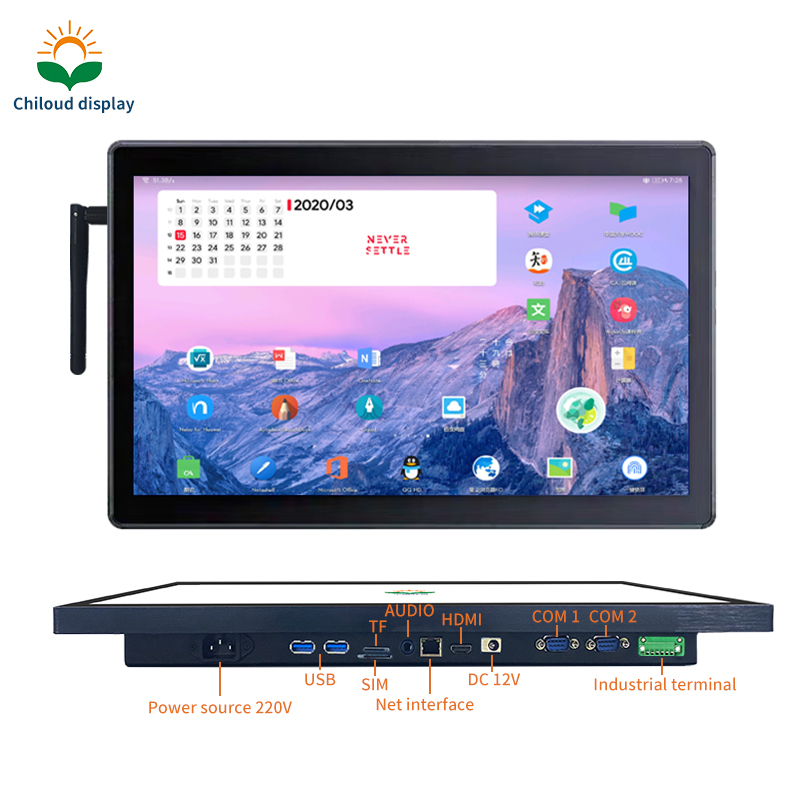
At airports, high-speed railway stations, and government service halls, self-service check-in/ticket counters have become a standard feature of modern services, greatly improving traffic efficiency and user experience. At this critical human-machine interaction node, the selection of display devices is crucial. In recent years, 21.5-inch LCD displays have become the preferred choice for many self-service check-in terminal manufacturers and operators due to their excellent adaptability, outstanding cost-effectiveness, and high reliability, leading the industry's hardware upgrade trend.
1、 Why 21.5 inches? ——The 'golden size' that accurately matches self-service check-in scenarios
The operation interface of the self-service check-in booth needs to display various contents such as flight information, seat map, operation prompts, and payment interface clearly and comfortably in a limited space. The 21.5-inch monitor has found the best balance point in this demand:
1. Optimal space efficiency: Compared to larger 24 or 27 inch screens, 21.5-inch screens can be more compactly integrated into the interior of the pavilion, saving valuable space and making the terminal design more compact and exquisite. At the same time, it is much larger than traditional 15 or 17 inch screens, providing ample visual area, avoiding information congestion, and improving operational comfort.
2. Full HD (1920x1080) resolution standard: 21.5 inches is a classic size that perfectly matches 1080P full HD resolution. At this resolution, the text edges are sharp and the graphic details are rich. Whether displaying a dense text flight list or a detailed airplane seat map, it ensures that users can see it at a glance and operate accurately.
3. Ergonomic line of sight: Users usually adopt a standing or slightly bent posture in front of the self-service pavilion, with an operating distance generally between 40-70 centimeters. At this line of sight, the 21.5-inch screen can cover the visual range without the need for users to rotate their heads significantly, reducing visual fatigue and improving operational fluency.
2、 Technological advantages empower intelligent interaction: more than just 'seeing clearly'
The functions of modern self-service check-in kiosks have expanded from simple check-in printing to seat selection and upgrade, baggage check-in processing, visa information verification, and even self-service retail. This poses higher performance requirements for displays, and the new generation of 21.5-inch industrial grade LCD displays is fully meeting these needs:
·Wide viewing angle and high brightness: Adopting IPS and other wide viewing angle technologies, it ensures that colors and content are not distorted when viewed from the side, making it convenient for multiple people to collaborate or for staff to assist from the side. At the same time, the high brightness (usually ≥ 250 nits, higher for outdoor or strong light environments) feature can effectively resist environmental light interference, ensuring that the screen is clear and visible under any lighting conditions.
·Excellent reliability and durability: designed for 7x24 hour uninterrupted operation, using industrial grade LCD panels and components, with a longer mean time between failures (MTBF). The screen surface is usually equipped with high-strength scratch resistant glass and supports anti glare and anti fingerprint processing, which can withstand high-frequency and high-intensity touch operations in public places.
·Rich interfaces and integration convenience: Standard configuration includes multiple video interfaces such as VGA, HDMI, DP, and supports USB touch integration, making it easy to quickly connect with various peripherals such as main control boards, card readers, passport readers, printers, etc., simplifying the assembly and debugging process for terminal integrators.
·Energy saving, environmental protection, and cost control: 21.5-inch screens generally have low power consumption, which is in line with the operating philosophy of green energy conservation. Its overall cost of ownership (including procurement costs, energy consumption costs, and maintenance costs) maintains a highly competitive level while providing excellent performance, providing a solid economic foundation for large-scale deployment.
3、 Market analysis of self-service check-in kiosks: upgrading display technology is an inevitable trend
With the acceleration of the intelligent transformation of global transportation hubs and the deepening of the concept of "contactless service", the self-service check-in booth market continues to grow rapidly. Its application scenarios have rapidly expanded from aviation to high-speed rail, ferries, long-distance passenger transportation, and even hotels, scenic spots, hospitals, and so on. In this process, user experience is the core competitiveness.
A self-service terminal with slow response, blurry image, and narrow perspective will directly affect the efficiency of passenger traffic and service satisfaction. Therefore, upgrading display hardware and adopting core components such as 21.5-inch full HD industrial displays with balanced performance, stability, and reliability has become an inevitable choice for terminal manufacturers to enhance product competitiveness and operators to optimize service quality. It is not only a display window for information, but also a key touchpoint for shaping a modern, efficient, and friendly public service image.
About Us:
As a leading provider of industrial display solutions, Shenzhenhuayuan focuses on providing high-performance and highly reliable LCD display modules and machines for self-service terminals, intelligent retail, digital signage, and other fields. Our 21.5-inch series industrial displays, with their excellent quality and targeted design, have become a trusted partner for many first-line self-service terminal brands, jointly promoting every innovative moment of smart travel.