Differences Between RK3566 and RK3568
Differences Between RK3566 and RK3568
Typical Applications
-
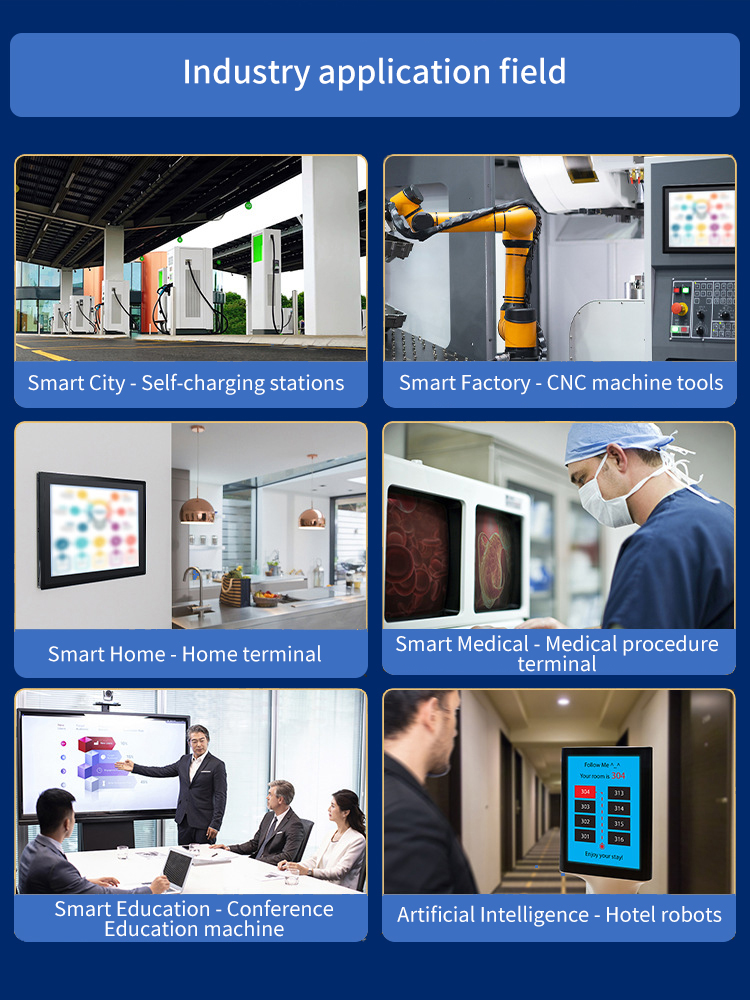
RK3566: Suitable for cost-sensitive, single-screen, light-load scenarios, such as educational tablets, advertising displays, smart home control panels, entry-level industrial HMIs, consumer electronics.
-
RK3568: Suitable for multi-screen interaction, high-speed expansion, industrial-grade scenarios, such as edge computing gateways, NVRs, automotive displays, industrial control, dual-network port devices, embedded systems with high-speed SSD/network cards.
Selection Guide
-
Budget priority & single function → Choose RK3566.
-
High performance, dual-screen / dual-network / high-speed storage required → Choose RK3568.
-
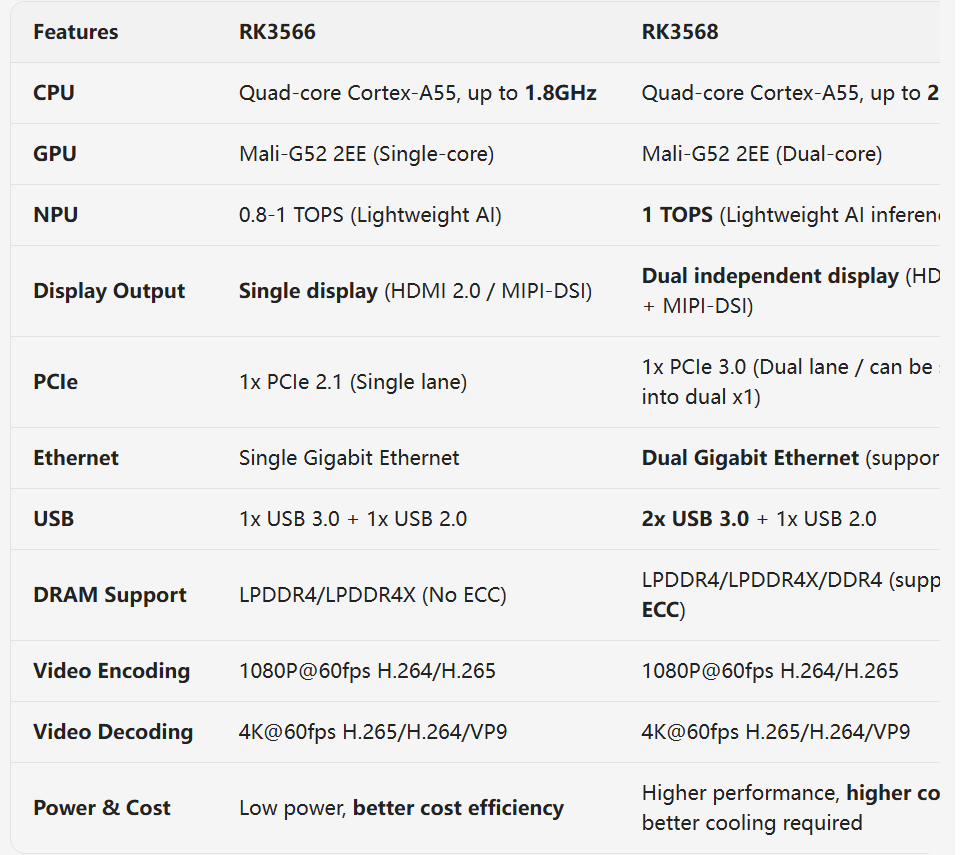
Both adopt 22nm process, support Android / Linux / Ubuntu, can be selected according to specific interfaces and performance requirements.
• Interfaces: The biggest gap. RK3568 supports dual Gigabit Ethernet, dual USB3.0, PCIe 3.0, dual independent display and ECC RAM, while RK3566 only supports single-channel and lower specs.
• Power & Cooling: RK3568 requires higher power and better cooling, increasing hardware cost.
Cost‑Performance Judgment
• RK3566 has higher cost‑performance
For consumer-level, single-function, cost-sensitive products: educational tablets, advertising players, smart home control panels, etc.
You won’t pay for unused dual Ethernet, PCIe or ECC memory.
• RK3568 has higher cost‑performance
For industrial and professional scenarios: industrial gateways, NVR, automotive displays, edge computing, projects requiring dual display, high-speed SSD or dual-network redundancy.
RK3566 cannot meet these interface requirements.
Selection Suggestions
1. Focus on real needs: Decide whether you must have dual display, dual Ethernet or high-speed expansion.
2. Total cost: If RK3566 meets your requirements, the total solution cost is usually 20%–30% lower than RK3568.
3. Future expansion: For long-term projects, RK3568 can reserve space for function upgrades if budget allows.