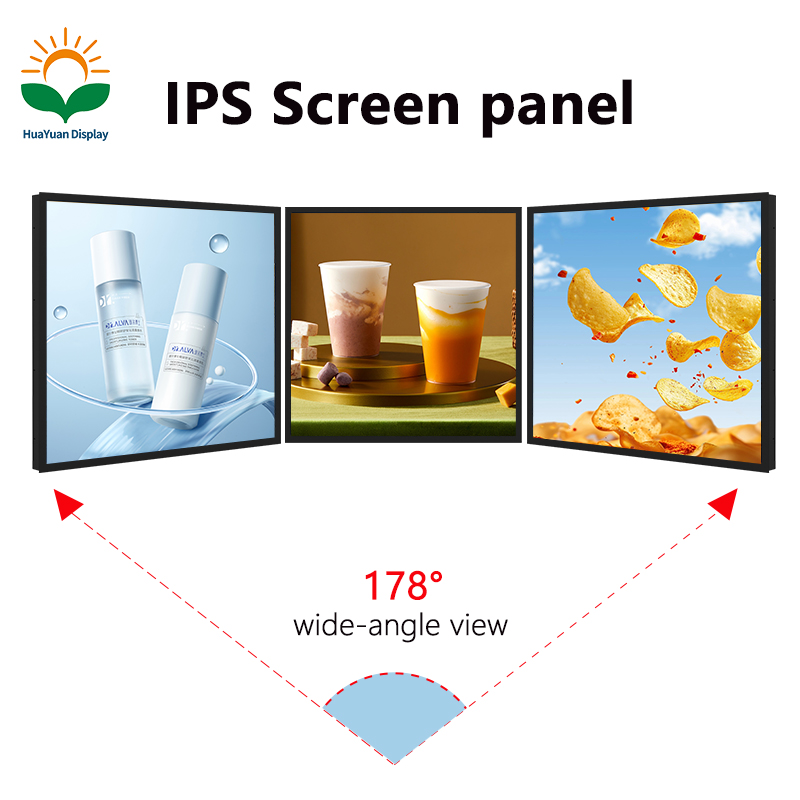
New Product Launch: Square Screen
Square screen: In the mainstream era of widescreen, why do these fields still adhere to the "beauty of squareness"?

In today's consumer electronics market dominated by 16:9 or even wider screen ratios, square screens (usually referring to 1:1 or near 1:1 ratio displays) seem to have become a "non mainstream" presence. However, it is precisely this seemingly retro screen form that demonstrates irreplaceable value in multiple professional and emerging fields. Square screens are not a legacy of technological evolution, but rather the optimal solution that has been rationally chosen in specific scenarios.
1、 The core advantages and characteristics of square screens
Display efficiency and space utilization: A 1:1 ratio has a natural advantage when displaying certain types of content. Compared to widescreens, square screens can more effectively utilize pixel area to display square or near square content, reducing black borders or content cropping.
Visual Symmetry: The square structure conforms to human aesthetic preferences for balance and stability, providing a more harmonious visual experience in situations that require symmetrical display, such as parallel surveillance screens and data dashboards.
Physical space adaptability: Many devices are limited by their physical form (such as handheld devices, embedded systems), and square screens can better adapt to compact spaces and optimize device structural design.
Content Originality: For a large amount of visual content with square proportions (such as traditional photography, medical imaging, and professional charts), a square screen can achieve the original presentation of "what you see is what you get".
2、 Deep analysis of core application areas
1. Industrial control and automation field
The industrial control room is a classic application scenario for square screens. The operating interfaces of DCS (Distributed Control System) and SCADA (Supervisory Control and Data Acquisition System) typically require simultaneous monitoring of multiple real-time data streams, process flow diagrams, and equipment status.
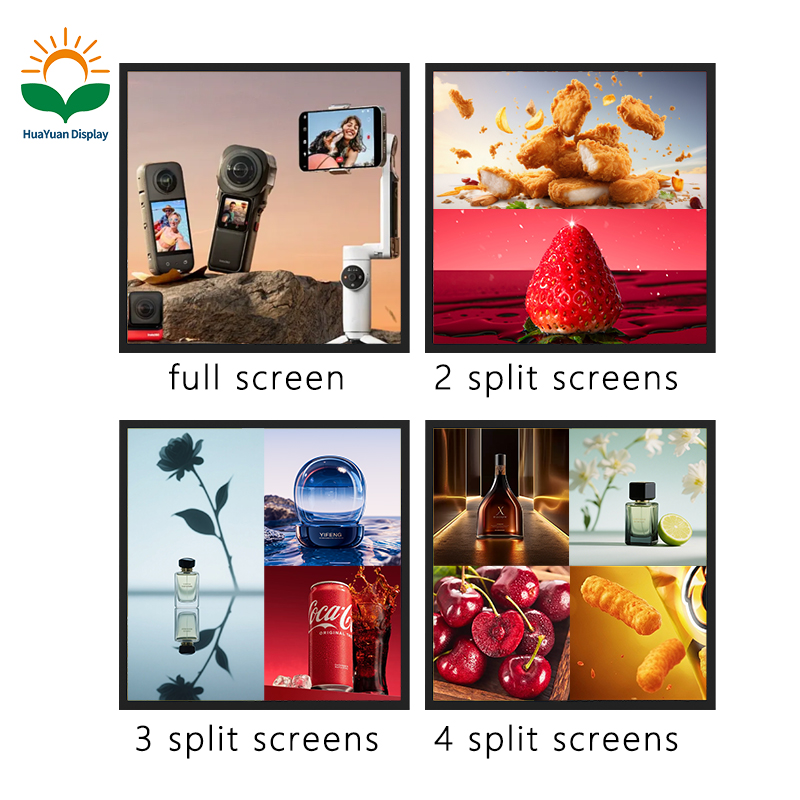
·Multi screen monitoring: Square screens are easy to achieve regular segmentation such as 2 × 2, 3 × 3, etc. Each sub screen maintains a reasonable aspect ratio, allowing monitoring personnel to observe more key parameters simultaneously without frequent screen switching.
·Instrument display: Traditional circular dials and instrument readings can be presented more naturally on square screens, which is in line with the cognitive habits of engineers.
·Case: Industrial automation giants such as Siemens and Honeywell still heavily use square screens for their customized control systems, especially in control centers for key facilities such as petrochemicals and power dispatch.
2. Professional Photography and Image Processing
The field of photography has never completely abandoned the square format. Square composition has always been an important form of professional creation, from the Lule double mirror in the film age to medium format cameras in the digital age.
·Medium format digital back: High end medium format systems from brands such as Hasselblad and Feisi often use square screens as framing and playback devices, ensuring that photographers can accurately evaluate 1:1 compositions.
·Studio monitoring: The square screen provides a complete view without cropping for product shooting and portrait shooting in commercial photography, especially suitable for shooting work that requires subsequent multi angle synthesis.
·Professional image editing workstation: When processing raw files of square imaging sensors, the square screen avoids large blank areas on both sides when processing on a widescreen, improving work efficiency.
3. Financial transactions and data analysis
The trader screen wall in the financial industry is a typical scenario for square screen applications. Square screens play an important role in the multi screen settings of professional financial information systems such as Bloomberg terminals and Reuters Eikon.
·Data intensive display: K-line charts, real-time quote lists, news streams, and other information can be arranged more compactly on a square screen, allowing traders to capture more dimensional data within a limited field of view.
·Multi screen array compatibility: A large display wall composed of multiple square screens, which does not cause awkward widescreen cutting issues during segmentation, and maintains availability in each sub area.
·Historical legacy: The information display habits of the financial industry have continued from early square CRT displays, and user interface and user experience design have been deeply adapted to this ratio.

4. Smart wearables and portable devices
With the development of the Internet of Things and wearable devices, square screens are revitalized on small-sized devices.
·Smart watches: Mainstream products such as Apple Watch and Samsung Galaxy Watch adopt square or nearly square designs to maximize display area within limited watch space, while also meeting the needs of application icon arrangement and information card display.
·Handheld professional devices: POS machines in the retail industry, barcode scanning terminals in the logistics industry, portable detection instruments in the medical field, etc. The square screen provides a balanced operating interface in both horizontal and vertical directions, adapting to different holding postures.
·Advantages: Compared to circular dials, square screens have significant advantages in displaying text information and interactive operations, making it easier to accurately click on the target area.
5. Professional medical imaging diagnosis
The special needs of the medical industry make square screens the preferred choice for certain critical applications.
·Medical imaging compatibility: Traditional medical images such as cross-sectional images from X-rays, CT scans, and pathological section scans are mostly square or approximately square. Specialized diagnostic displays use a 1:1 ratio to fully present the original data.
·Comparative viewing: When doctors need to compare multiple image sequences simultaneously, a square screen array provides a more consistent viewing experience and reduces visual adaptation burden.
·Regulatory compliance: Medical imaging diagnostic equipment has strict display standards, and square screens are industry standard requirements in certain specialties such as mammography.
6. Education industry and special needs
There are some niche applications of square screens in the field of education.
·Programming education equipment: Children's programming learning equipment (such as some STEM education robots with matching screens) adopts a square screen, which displays code blocks and simulated running effects at the same time.
·Score display: The digital score display adopts a square scale, which can fully display the score pages and reduce the frequency of page flipping.
·Assistive technology: For learners with special cognitive needs, square screens reduce the visual scanning range and help with concentration.
3、 Challenges and Future Trends Faced by Square Screens
Current challenges
·Content ecological limitations: Mainstream video content (16:9, 21:9) playing on a square screen will produce large areas of black borders, resulting in poor entertainment experience.
·Supply chain scale: The production scale of square screens is much smaller than that of mainstream widescreens, resulting in relatively high costs and longer customization cycles.
·Consumer cognitive inertia: Ordinary users have become accustomed to widescreen as the "modern" standard, while square screens are often mistaken for outdated technology.
Future Development Trends
1. Breakthroughs in flexible display technology: Foldable and rollable flexible displays may redefine screen form, with square as a neutral ratio that may give rise to multiple practical ratios in different folding states.
2. AR/VR device innovation: Augmented reality and virtual reality headsets pursue larger field of view coverage, and square or circular display modules may be more suitable for human visual field characteristics than traditional widescreens.
3. Deepening customization in professional fields: With the development of Industry 4.0 and precision medicine, the demand for customized display devices in professional fields has increased, and square screens may further consolidate their position in certain segmented markets.
4. Return of Retro Aesthetics: In the field of consumer electronics, retro design elements periodically return, and square screens may appear as a differentiated feature in high-end niche consumer devices.